
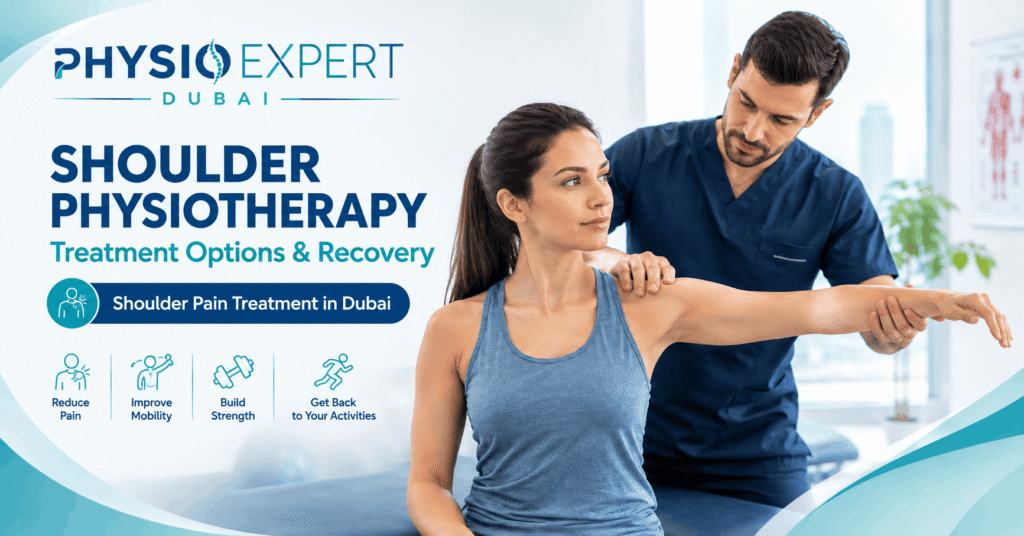
Shoulder pain can make everyday activities surprisingly difficult. Reaching overhead, putting on clothes, lifting objects, sleeping on your side or exercising can all become uncomfortable when shoulder movement is restricted or painful.
Shoulder pain can develop suddenly after an injury or gradually because of repeated activity, changes in exercise, work demands or other musculoskeletal problems. Because several different conditions can cause similar symptoms, understanding the underlying problem is an important part of choosing appropriate treatment.
Shoulder physiotherapy in Dubai can help assess your symptoms, shoulder movement, strength and functional limitations before developing an individualised rehabilitation programme.
Whether you are dealing with persistent shoulder discomfort, recovering from an injury or looking for shoulder pain treatment in Dubai, physiotherapy may form part of a non-surgical rehabilitation approach for many musculoskeletal conditions.
This guide explains common causes of shoulder pain, available treatment options, exercises, recovery considerations and when you should seek professional assessment.
What Causes Shoulder Pain?
The shoulder is a complex region involving several joints, muscles, tendons and other structures. Pain can therefore have many possible causes.
Common contributors include:
- Muscle strain
- Rotator cuff-related problems
- Tendon irritation
- Shoulder stiffness
- Frozen shoulder
- Shoulder instability
- Sports injuries
- Repetitive overhead activity
- Poor physical conditioning
- Post-operative recovery
- Trauma
Shoulder pain can also be referred from other areas, including the neck.
Because the cause is not always obvious from symptoms alone, an appropriate assessment can help determine the most suitable treatment approach.
When Should You See a Physiotherapist for Shoulder Pain?
Not every episode of shoulder pain requires physiotherapy.
Mild symptoms following an unfamiliar activity may settle with appropriate activity modification and gradual return to normal movement.
However, consider professional assessment if your shoulder pain:
- Persists for several weeks
- Keeps returning
- Limits your range of motion
- Makes dressing difficult
- Affects sleep
- Prevents exercise
- Makes lifting difficult
- Interferes with work
- Developed after an injury
- Is associated with weakness
A physiotherapist can assess your shoulder and determine whether rehabilitation is appropriate.
Significant trauma, visible deformity, sudden severe weakness or other concerning symptoms may require medical assessment.
What Is Shoulder Physiotherapy in Dubai?
Shoulder physiotherapy Dubai services typically begin with a detailed assessment.
Your physiotherapist may evaluate:
- Shoulder range of motion
- Muscle strength
- Shoulder blade movement
- Upper-back mobility
- Neck movement
- Functional activities
- Pain during specific movements
- Previous injuries
- Sporting or occupational demands
The assessment helps identify movement limitations and factors that may be contributing to your symptoms.
Treatment can then be tailored to your individual needs.
How Can Physiotherapy Help Shoulder Pain?
The goals of physiotherapy depend on the underlying problem.
Treatment may help you:
- Improve shoulder movement
- Build strength
- Improve movement control
- Increase tolerance to daily activities
- Return to exercise
- Recover after surgery
- Improve confidence with movement
- Gradually return to sport
A rehabilitation programme is usually progressive, with exercises becoming more challenging as your physical capacity improves.
Common Shoulder Conditions Treated With Physiotherapy
Rotator Cuff-Related Shoulder Pain
The rotator cuff is a group of muscles and tendons involved in shoulder movement and stability.
Problems affecting these structures can produce pain during activities such as:
- Reaching overhead
- Lifting
- Dressing
- Reaching behind the back
- Sleeping on the affected side
Physiotherapy may focus on restoring appropriate movement and progressively strengthening the shoulder.
Frozen Shoulder
Frozen shoulder can involve pain and significant restriction of shoulder movement.
People may find it difficult to:
- Raise the arm
- Reach behind the back
- Put on clothing
- Reach overhead
Shoulder rehabilitation Dubai programmes for frozen shoulder may focus on managing symptoms and gradually restoring movement according to the individual’s stage of recovery.
Shoulder Instability
Some people experience a feeling that the shoulder is unstable or may “give way”.
Rehabilitation can focus on:
- Strength
- Shoulder control
- Coordination
- Stability
- Functional movement
The appropriate approach depends on the underlying cause and history.
Shoulder Injuries in Athletes
Athletes involved in throwing, swimming, tennis, gym training or contact sports may place substantial demands on the shoulder.
Rehabilitation may focus on restoring:
- Strength
- Mobility
- Endurance
- Movement control
- Sport-specific capacity
Post-Surgical Shoulder Rehabilitation
Physiotherapy may form an important part of recovery following certain shoulder surgeries.
The rehabilitation programme should follow the surgeon’s instructions and may initially include protected movement before progressing towards strengthening and functional activities.
What Treatments Are Used for Shoulder Pain?
There is no single treatment that works for every shoulder problem.
Therapeutic Exercise
Exercise is often a key component of shoulder rehabilitation.
Depending on your condition, exercises may target:
- Rotator cuff strength
- Shoulder blade control
- Upper-back strength
- Shoulder mobility
- General upper-limb strength
- Functional capacity
Exercises should be selected and progressed according to your assessment.
Mobility Exercises
Reduced shoulder movement can affect everyday activities.
Appropriate mobility exercises may help restore movement where restrictions are present.
The type and intensity of exercise depend on the cause of the restriction.
Progressive Strengthening
Strengthening can help the shoulder tolerate everyday and sporting demands.
Exercises may progress from low-load movements to more demanding resistance exercises.
The progression should be gradual and appropriate to your recovery stage.
Manual Therapy
Manual therapy may be used as part of a broader rehabilitation programme when clinically appropriate.
Hands-on techniques may help address movement restrictions or provide short-term symptom relief.
Active exercise and rehabilitation remain important components of many shoulder treatment programmes.
Education and Activity Modification
Your physiotherapist may help identify movements or activities that currently aggravate your symptoms.
This does not necessarily mean avoiding those activities indefinitely.
Instead, the goal may be to modify the activity temporarily and gradually rebuild your ability to perform it.
What Is Shoulder Pain Treatment in Dubai?
Shoulder pain treatment Dubai can involve different approaches depending on the cause and severity of symptoms.
A physiotherapy programme may include:
- Initial assessment
- Identification of movement limitations
- Education about the condition
- Mobility exercises
- Strengthening
- Functional rehabilitation
- Home exercises
- Progress reassessment
The treatment plan can be modified according to your response.
How Long Does Shoulder Physiotherapy Take?
Recovery time varies significantly.
The shoulder physiotherapy Dubai treatment duration may depend on:
- Cause of pain
- Severity
- Duration of symptoms
- Previous injuries
- Age
- Physical condition
- Rehabilitation goals
- Response to treatment
- Consistency with home exercises
A minor strain may improve relatively quickly, while frozen shoulder, significant injuries or post-operative rehabilitation may require a longer programme.
There is no universal number of sessions that applies to every patient.
How Many Physiotherapy Sessions Will You Need?
The number of sessions depends on your individual condition.
Some patients may require only a small number of supervised appointments combined with a home exercise programme.
Others may require longer-term rehabilitation because of:
- Significant weakness
- Persistent stiffness
- Complex injury
- Post-operative recovery
- Sporting requirements
- Slow progress
Your physiotherapist should regularly review your progress and determine whether treatment should continue, change or become less frequent.
What Exercises Can Help Shoulder Pain?
The appropriate exercises depend on your diagnosis and assessment.
Common exercise categories may include:
Shoulder Mobility Exercises
These can help restore movement when appropriate.
Rotator Cuff Strengthening
Progressive resistance exercises can help improve the capacity of the muscles supporting the shoulder.
Scapular Exercises
Exercises targeting shoulder blade control can form part of rehabilitation for some patients.
Upper-Back Strengthening
Improving upper-back strength and movement may support overall shoulder function.
Functional Exercises
As recovery progresses, exercises may become increasingly similar to the activities you need to perform.
You should not start unfamiliar exercises solely because they are recommended for shoulder pain online. The appropriate programme depends on the cause of your symptoms.
Can Physiotherapy Help Shoulder Pain From Gym Training?
Yes, physiotherapy can be useful for assessing many gym-related shoulder problems.
Common contributing factors may include:
- Sudden increases in training volume
- High resistance
- Repetitive overhead movements
- Poor load progression
- Reduced strength or mobility
- Returning to heavy training too quickly after a break
A physiotherapist can assess the shoulder and help determine which exercises can be continued, modified or temporarily reduced.
The objective is often to gradually rebuild training capacity rather than avoid exercise indefinitely.
Can Physiotherapy Help Shoulder Pain From Sports?
Sports that involve repetitive upper-limb movements can place significant demands on the shoulder.
Examples include:
- Swimming
- Tennis
- Badminton
- Cricket
- Throwing sports
- Gymnastics
- Weight training
Sports rehabilitation may involve progressively rebuilding strength, mobility, endurance and sport-specific movement.
Returning to full training should be gradual and based on physical readiness.
Shoulder Rehabilitation After Surgery
Post-operative rehabilitation varies according to the surgical procedure.
Early rehabilitation may focus on:
- Protecting healing tissues
- Following movement restrictions
- Managing symptoms
- Maintaining appropriate mobility
Later stages may involve:
- Progressive strengthening
- Functional exercises
- Resistance training
- Sport-specific movements
Your surgeon’s rehabilitation protocol should guide the timing of exercises and movement progression.
What Happens During Your First Shoulder Physiotherapy Appointment?
The first appointment usually begins with a discussion of your symptoms.
Your physiotherapist may ask:
- When did the pain start?
- Was there an injury?
- What activities aggravate the symptoms?
- Is the pain affecting sleep?
- Can you lift your arm normally?
- Have you had previous shoulder problems?
- What type of work do you do?
- Do you participate in sports or gym training?
A physical assessment may then examine:
- Shoulder movement
- Strength
- Shoulder blade control
- Neck movement
- Upper-back mobility
- Functional movements
Based on the findings, your physiotherapist can explain potential treatment options and establish rehabilitation goals.
What Can You Do Between Physiotherapy Sessions?
Your rehabilitation can continue outside your appointments.
Depending on your condition, you may be given a home programme involving:
- Mobility exercises
- Strengthening
- Shoulder control exercises
- Upper-back exercises
- Functional movements
Following your programme consistently can help reinforce the work completed during supervised sessions.
If an exercise causes significant or unusual symptoms, discuss it with your physiotherapist.
How Can You Reduce the Risk of Recurring Shoulder Pain?
There is no guaranteed way to prevent shoulder pain, but maintaining physical capacity can help support shoulder function.
Useful strategies include:
Build Strength Gradually
Avoid sudden increases in resistance or training volume.
Maintain Mobility
Regular appropriate movement can help maintain shoulder function.
Warm Up Before Demanding Activity
A gradual warm-up can prepare your body for exercise.
Avoid Sudden Changes in Training
Large increases in workload can place additional stress on tissues.
Address Recurring Symptoms
If the same shoulder problem repeatedly returns, consider an assessment to identify potential contributing factors.
When Should Shoulder Pain Be Medically Assessed?
Most shoulder pain is not caused by an emergency. However, some symptoms require prompt medical assessment.
Seek medical attention if shoulder pain is associated with:
- Significant trauma
- Visible deformity
- Sudden inability to move the arm
- Severe or rapidly increasing pain
- Significant weakness
- Loss of sensation
- Chest pain or breathing difficulties
- Other unusual or concerning symptoms
A physiotherapist can manage many musculoskeletal conditions, but serious injuries or symptoms suggesting another medical problem require appropriate medical evaluation.
How Physio Expert Dubai Approaches Shoulder Rehabilitation
At Physio Expert Dubai, shoulder rehabilitation begins with an assessment of your symptoms, movement, strength and functional requirements.
Depending on the findings, your programme may include:
- Therapeutic exercise
- Shoulder mobility work
- Progressive strengthening
- Rotator cuff rehabilitation
- Shoulder blade control exercises
- Manual therapy where appropriate
- Activity modification
- Home exercises
- Functional rehabilitation
- Sport-specific rehabilitation
- Progress reassessment
The programme can be adjusted as your symptoms and physical capacity change.
Frequently Asked Questions About Shoulder Physiotherapy
What is shoulder physiotherapy?
Shoulder physiotherapy is a rehabilitation approach designed to assess and manage shoulder pain, movement limitations, weakness and functional problems. Treatment may include exercise, mobility work, strengthening and education.
How can shoulder physiotherapy in Dubai help?
Shoulder physiotherapy Dubai can help identify factors contributing to your symptoms and develop an individualised rehabilitation programme focused on improving movement, strength and function.
What is the best treatment for shoulder pain?
There is no single treatment suitable for every shoulder condition. Depending on the cause, treatment may include exercise, mobility work, progressive strengthening, education and manual therapy where appropriate.
How long does shoulder physiotherapy take?
The recovery timeline depends on the cause and severity of the condition, previous injuries, physical capacity and rehabilitation goals. Some problems improve relatively quickly, while others require longer rehabilitation.
How many physiotherapy sessions will I need for shoulder pain?
There is no fixed number. The required sessions depend on your condition, progress and rehabilitation goals. Your treatment plan should be reassessed regularly.
Can physiotherapy help frozen shoulder?
Physiotherapy may form part of the management of frozen shoulder. Treatment generally focuses on managing symptoms and gradually improving shoulder movement according to the stage and severity of the condition.
Can physiotherapy help rotator cuff problems?
Physiotherapy may help manage many rotator cuff-related conditions through progressive strengthening, movement rehabilitation and activity modification.
Can I exercise with shoulder pain?
The answer depends on the cause and severity of your symptoms. Some exercises may be appropriate, while others may need to be modified temporarily. A physiotherapist can help determine an appropriate exercise programme.
Can physiotherapy help after shoulder surgery?
Yes. Physiotherapy can be an important part of post-operative rehabilitation. The programme should follow the surgical protocol and progress according to healing and functional recovery.
What is shoulder rehabilitation?
Shoulder rehabilitation Dubai involves a structured programme designed to restore shoulder movement, strength, control and function after injury, surgery or persistent pain.
When should I see a physiotherapist for shoulder pain?
Consider an assessment when shoulder pain persists, repeatedly returns, limits movement, affects sleep or interferes with work, exercise or daily activities.
Final Thoughts
Shoulder pain can have many different causes, and the appropriate treatment depends on the underlying problem and individual circumstances.
Shoulder physiotherapy Dubai can provide a structured approach to assessing movement, strength and function while developing a progressive rehabilitation programme.
For people looking for shoulder pain treatment Dubai, physiotherapy may involve therapeutic exercise, mobility work, progressive strengthening, education and other clinically appropriate approaches.
Whether you are recovering from an injury, dealing with persistent shoulder discomfort, returning to sport or undergoing post-operative rehabilitation, shoulder rehabilitation Dubai should be tailored to your physical needs and recovery goals.
Physio Expert Dubai provides individualised shoulder physiotherapy focused on improving movement, strength and functional capacity while progressing rehabilitation according to your condition.
