
Joint stiffness, muscle tension and persistent pain can make everyday activities more difficult. Turning your neck, reaching overhead, bending down or walking comfortably may become challenging when movement is restricted or certain activities aggravate your symptoms.
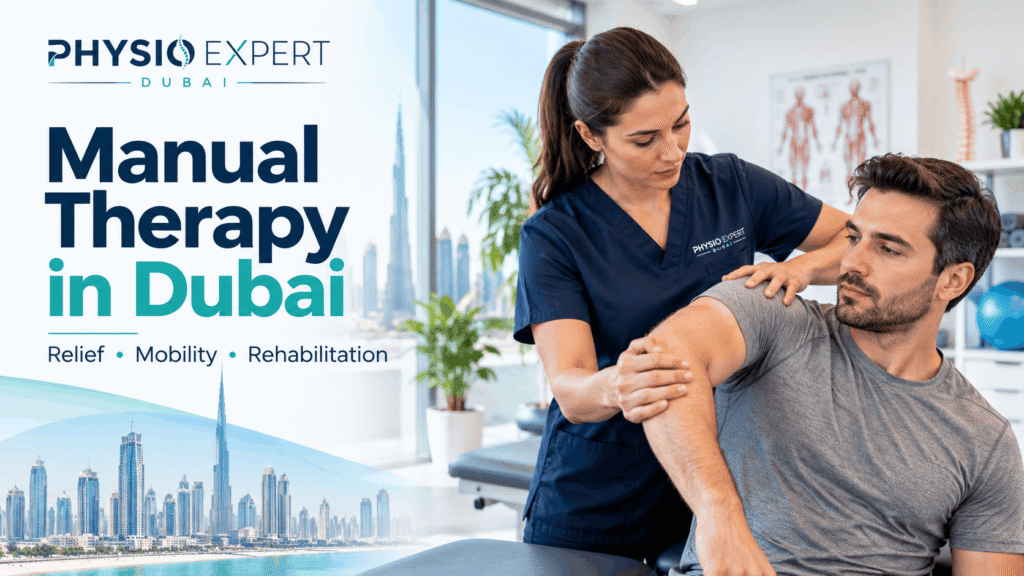
Manual therapy is one approach used in physiotherapy to help manage selected musculoskeletal conditions. It involves hands-on techniques applied by a trained physiotherapist to address movement restrictions, reduce discomfort and support rehabilitation.
Manual therapy in Dubai may be considered for certain conditions affecting the back, neck, shoulders, hips and other joints. However, its suitability depends on the diagnosis, your medical history and the symptoms you experience. It is generally most effective as part of a broader treatment plan that may include exercise, movement education and activity modification.
This guide explains what manual therapy involves, which conditions it may help manage, what to expect during treatment and when another approach may be more appropriate.
What Is Manual Therapy?
Manual therapy is a group of hands-on techniques used by physiotherapists to assess and treat selected musculoskeletal problems.
Depending on your condition, treatment may involve controlled movements of a joint, gentle mobilisation, soft-tissue techniques or other clinically appropriate hands-on approaches.
The aim may be to improve comfortable movement, manage pain or help you participate more effectively in rehabilitation exercises.
Manual therapy is not a single treatment technique. The approach varies according to the body area being treated, the underlying condition and your response to assessment.
What Is the Difference Between Manual Therapy and Manual Physiotherapy?
The terms manual therapy and manual physiotherapy are often used interchangeably. Manual therapy generally refers to the hands-on techniques themselves, while manual physiotherapy can describe a physiotherapy approach that incorporates these techniques into a wider rehabilitation programme.
For example, a physiotherapist treating neck stiffness might use gentle joint mobilisation alongside exercises to improve neck movement and strength.
The hands-on treatment is only one part of the plan. Exercise and self-management strategies may be equally important for maintaining improvements.
How Does Manual Therapy Work?
Manual therapy is intended to influence symptoms and movement through carefully selected hands-on techniques.
Depending on the technique and condition, it may help:
- Reduce pain sensitivity temporarily
- Improve comfortable joint movement
- Address certain movement restrictions
- Reduce the feeling of muscle tightness
- Make therapeutic exercises easier to perform
- Support a return to normal activities
The effects vary between individuals. Manual therapy does not necessarily correct a structural problem or permanently resolve the underlying cause of pain.
A physiotherapist should explain why a technique is being recommended and how it fits into your rehabilitation goals.
What Conditions Can Manual Therapy Treat?
Manual therapy may be useful for selected musculoskeletal conditions. It is not suitable for every cause of pain, and a proper assessment is important before treatment begins.
1. Neck Pain and Stiffness
Neck pain can develop following prolonged positioning, repetitive activities, muscle strain or other musculoskeletal problems.
Symptoms may include stiffness, discomfort when turning the head and difficulty maintaining certain positions.
Depending on the assessment, manual therapy may include gentle neck joint mobilisation or soft-tissue techniques.
Treatment may be combined with neck mobility exercises, strengthening and advice on managing work-related activities.
Persistent neck pain accompanied by significant weakness, new numbness, coordination difficulties or other neurological symptoms requires appropriate medical assessment.
2. Lower Back Pain
Lower back pain can arise from several structures, including muscles, joints and discs. In many cases, the exact source cannot be identified from symptoms alone.
Manual therapy may help some people with lower back pain experience short-term symptom relief or improved movement.
Treatment may be combined with:
- Trunk and hip strengthening
- Mobility exercises
- Functional movement training
- Advice on lifting and daily activities
- A gradual return to normal physical activity
Manual therapy is not a guaranteed solution for back pain and should not replace further assessment when symptoms suggest a more serious condition.
3. Shoulder Pain and Restricted Movement
Shoulder pain can affect reaching, dressing, lifting and overhead activities.
Depending on the diagnosis, a physiotherapist may use selected manual techniques to help manage discomfort or address certain movement restrictions.
Manual therapy may be considered alongside exercise for some cases of shoulder stiffness, rotator cuff-related pain or other musculoskeletal shoulder problems.
However, different shoulder conditions require different approaches. For example, frozen shoulder may involve substantial capsular stiffness, while a tendon injury may require carefully progressed loading.
Treatment should be adapted to the specific condition rather than using the same technique for every shoulder problem.
4. Knee Pain
Knee pain may be associated with osteoarthritis, patellofemoral pain, movement restrictions or injuries affecting the surrounding tissues.
In selected cases, manual therapy may be used alongside exercise to help manage symptoms and improve comfortable movement.
Rehabilitation may also include strengthening the quadriceps and hip muscles, balance training and gradual progression towards walking, stairs or sport.
A hot, red knee, major swelling after an injury or an inability to bear weight requires medical assessment before routine manual treatment.
5. Hip Pain and Stiffness
Hip pain can affect walking, standing, getting out of a chair and activities that require hip rotation.
For some musculoskeletal conditions, manual therapy may help address movement restrictions or provide short-term relief.
A physiotherapy programme may also include hip strengthening, mobility exercises and functional training.
The appropriate approach depends on whether the symptoms are related to joint stiffness, muscle or tendon problems, arthritis or another cause.
6. Muscle Tightness and Soft-Tissue Discomfort
Some people experience muscle tension or discomfort after exercise, repetitive work or prolonged periods in one position.
Soft-tissue manual techniques may help some patients manage discomfort or temporarily improve their tolerance for movement.
However, a sensation of tightness does not always mean that a muscle needs to be loosened through hands-on treatment. Weakness, workload, movement habits and other factors may also contribute.
Exercise, appropriate recovery and changes to aggravating activities may therefore be important parts of treatment.
7. Sports-Related Musculoskeletal Pain
Athletes and recreational exercisers may experience pain or movement restrictions associated with training and sporting activity.
Manual therapy may sometimes be used to help manage symptoms, but it should not be the only component of rehabilitation.
A sports injury programme may also include progressive strengthening, balance training, movement-control exercises and sport-specific drills.
For significant injuries involving ligaments, tendons, muscles or bones, treatment must reflect the diagnosis and stage of recovery.
8. Ankle and Foot Stiffness
Ankle stiffness can affect walking, squatting, running and stair climbing. It may occur after an ankle sprain or alongside other musculoskeletal conditions.
Where appropriate, a physiotherapist may use selected joint mobilisation techniques to help improve available movement.
Rehabilitation may also include calf strengthening, balance exercises and progressive weight-bearing activities.
Persistent swelling, significant pain or difficulty bearing weight after an ankle injury may require further medical assessment.
What Techniques Are Used in Manual Therapy?
The techniques used depend on your condition, the treatment goals and the findings of your assessment.
Joint Mobilisation
Joint mobilisation involves controlled, passive movements applied to a joint.
The movements are generally graded according to the individual’s symptoms, mobility and treatment needs.
Mobilisation may be used to help manage pain or improve movement in selected musculoskeletal conditions.
Soft-Tissue Techniques
Soft-tissue techniques involve hands-on treatment directed at muscles and other soft tissues.
They may be used to manage discomfort, improve short-term movement tolerance or prepare a patient for exercise.
The evidence and effectiveness vary according to the technique and condition, and these methods should not be presented as a universal solution for muscle pain.
Manipulation
Joint manipulation involves a controlled, relatively quick movement applied to a joint. Some techniques may produce a clicking or popping sound, but that sound does not indicate that a joint has been realigned or that treatment has necessarily worked.
Manipulation is not appropriate for every patient. The physiotherapist must consider the individual’s medical history, symptoms, risks and relevant clinical findings before deciding whether it is suitable.
High-velocity techniques involving the neck require particular caution and careful risk assessment.
Assisted Movement
A physiotherapist may guide a joint or body part through a movement to assess mobility or help the patient become more comfortable with a particular range.
This may be useful when pain or stiffness limits movement, provided the technique is appropriate for the condition.
What Happens During a Manual Therapy Appointment?
If you book manual physiotherapy in Dubai, the appointment should begin with an assessment rather than immediate hands-on treatment.
Step 1: Discuss Your Symptoms
Your physiotherapist may ask about:
- Where you experience pain
- When symptoms started
- Whether an injury occurred
- Which movements aggravate your symptoms
- Previous injuries or surgery
- Relevant medical conditions
- Medication and other treatments
- Your daily activities and rehabilitation goals
Step 2: Complete a Physical Assessment
The physiotherapist may examine movement, strength, flexibility and relevant functional tasks.
They will also look for signs suggesting that medical investigation or referral is needed.
Step 3: Agree on a Treatment Plan
If manual therapy is appropriate, the physiotherapist should explain the proposed technique, its intended purpose and any relevant risks.
You should have the opportunity to ask questions and decline a technique if you are uncomfortable with it.
Step 4: Combine Treatment With Rehabilitation
After manual treatment, your physiotherapist may recommend exercises or movement strategies to help you use any improvement in comfort or mobility.
The programme may change according to your response and progress.
Is Manual Therapy Painful?
Manual therapy should be selected and adjusted according to the condition and the patient’s tolerance.
Some techniques may cause mild, temporary discomfort, particularly when an area is sensitive. However, treatment should not routinely involve forcing a joint or applying excessive pressure.
Tell your physiotherapist if you experience sharp pain, increasing symptoms, dizziness, unusual sensations or discomfort that makes you feel unsafe.
The technique can be modified or stopped if necessary.
Also Read More – Where to Find the Best Physiotherapist Near You in Dubai?
How Many Manual Therapy Sessions Do You Need?
There is no fixed number of sessions suitable for everyone.
The duration of treatment depends on the diagnosis, symptom severity, functional goals and response to rehabilitation.
Some people may benefit from a limited number of appointments as part of a broader exercise programme. Others may need a longer period of care because of persistent symptoms or a more complex condition.
Progress should be reviewed regularly. If manual therapy is not providing meaningful benefit, your physiotherapist should reconsider the approach rather than continuing the same technique without reassessment.
Is Manual Therapy Better Than Exercise?
Manual therapy and exercise serve different purposes, and neither is automatically the best option for every condition.
Manual therapy may provide short-term symptom relief or help with selected movement restrictions. Exercise can help develop strength, endurance, balance and the physical capacity needed for everyday activities.
For many musculoskeletal conditions, a combination of approaches may be appropriate.
Exercise also allows patients to develop skills and physical capacity they can continue using independently. For this reason, manual therapy is generally best considered as one component of a personalised treatment plan rather than a replacement for active rehabilitation.
Who Should Avoid or Take Extra Care With Manual Therapy?
Manual therapy may be unsuitable or require modification in certain circumstances.
These can include suspected fractures, significant recent trauma, active infection, some inflammatory conditions, severe osteoporosis, certain bleeding disorders or medication-related bleeding risks.
The appropriate precautions depend on the technique and the patient’s medical history.
Tell your physiotherapist about previous surgery, diagnosed medical conditions, relevant medications, unexplained symptoms and any recent injury before treatment.
Seek medical assessment if you have severe or unexplained pain, progressive weakness, new loss of sensation or other concerning symptoms. Manual therapy should not be used to delay investigation of a potentially serious condition.
How to Choose Manual Therapy in Dubai
When considering manual therapy treatment, look for a physiotherapy service that assesses your symptoms and explains why a particular technique may be useful.
Consider asking:
- Will you assess my condition before treatment?
- What is the purpose of the proposed manual technique?
- What benefits can reasonably be expected?
- Are there any risks or reasons the technique may not suit me?
- Will treatment include exercises or other rehabilitation?
- How will we measure whether treatment is helping?
A suitable treatment plan should focus on meaningful improvements in pain, movement and daily function rather than simply the number of hands-on techniques performed.
Final Thoughts
Manual therapy can be a useful part of physiotherapy for selected musculoskeletal conditions affecting the neck, back, shoulders, hips, knees and other areas. Its purpose is to help manage symptoms or movement restrictions when a hands-on approach is clinically appropriate.
Manual therapy in Dubai should begin with an individual assessment and a clear explanation of the proposed treatment. Depending on your condition, treatment may be combined with strengthening, mobility exercises, movement education and a gradual return to everyday activities.
Manual therapy is not a universal solution, and improvement cannot be guaranteed. The most appropriate approach depends on the underlying problem, your health history and your response to treatment.
At Physio Expert Dubai, manual physiotherapy can be considered as part of an individualised rehabilitation plan focused on your symptoms, movement and functional goals.
Frequently Asked Questions About Manual Therapy in Dubai
What is manual therapy in physiotherapy?
Manual therapy is a group of hands-on techniques used by physiotherapists to help manage selected musculoskeletal problems. It may include joint mobilisation, soft-tissue techniques and, where appropriate, manipulation.
Does manual therapy reduce pain?
Manual therapy may provide short-term pain relief for some musculoskeletal conditions. Results vary, and it is generally most useful when integrated with appropriate exercise and rehabilitation.
Is manual physiotherapy suitable for back pain?
It may be suitable for some people with lower back pain following an assessment. Treatment often combines manual techniques with exercise, education and strategies for returning to normal activity.
Can manual therapy help frozen shoulder?
Selected manual techniques may form part of treatment for frozen shoulder, but the approach must account for pain and stiffness. Gentle, appropriately progressed movement and other treatment options may also be needed.
Is manual therapy the same as massage?
No. Massage generally focuses on soft tissues, while manual therapy can include joint mobilisation, manipulation and other hands-on techniques. The approach depends on the treatment goal and clinical assessment.
How long does a manual therapy session take?
Appointment duration varies according to the assessment, treatment plan and clinic arrangements. The proportion of time spent on manual techniques should reflect your individual needs rather than follow a fixed rule.
Can manual therapy fix joint alignment?
Manual therapy may influence pain and movement, but a clicking sound or temporary change in comfort does not prove that a joint has been permanently realigned. Treatment claims should be based on appropriate clinical evidence.
Is manual therapy safe?
Manual therapy is generally considered appropriate for many people when selected and performed by a qualified professional following suitable screening. Risks vary by technique and patient, so assessment and informed consent are important.
Should manual therapy be combined with exercise?
For many musculoskeletal conditions, combining hands-on treatment with exercise and self-management strategies is appropriate. Exercise can help maintain progress and improve strength and function.
When should I seek medical advice instead of manual therapy?
Seek prompt medical assessment for severe pain after trauma, suspected fracture, a hot and swollen joint with fever, progressive neurological symptoms or other concerning signs. Emergency symptoms should not be managed through routine physiotherapy.
