
Back pain, neck stiffness and restricted movement can make everyday activities difficult. Turning your head, sitting at a desk, bending down or standing for extended periods may become uncomfortable when spinal movement is limited.
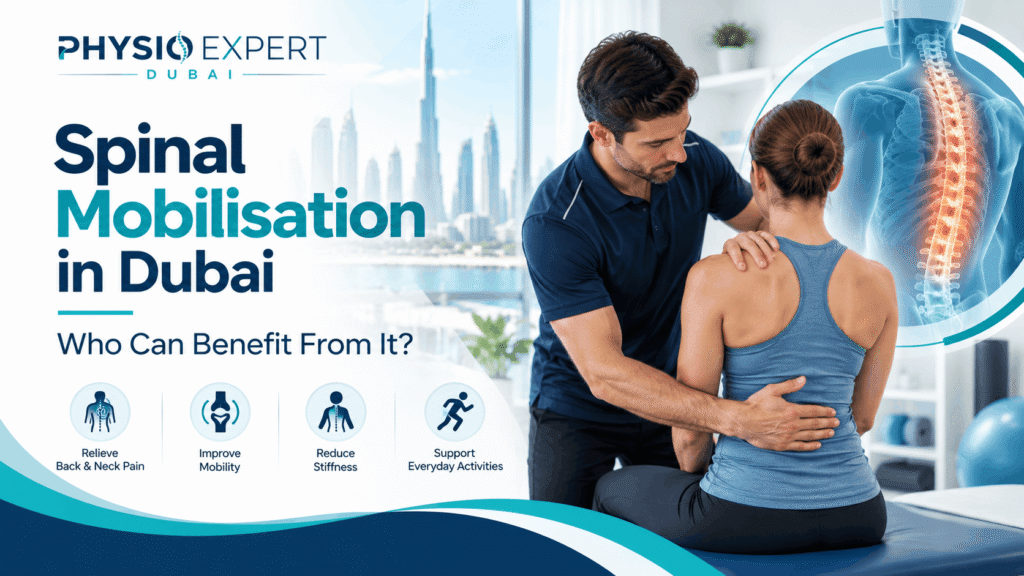
Spinal mobilisation is a hands-on physiotherapy technique used to help manage selected musculoskeletal conditions affecting the spine. It involves controlled, usually gentle movements applied to spinal joints with the aim of reducing discomfort and improving movement where appropriate.
Spinal mobilisation in Dubai may be considered for people experiencing certain types of neck pain, back pain and movement-related stiffness. However, it is not suitable for every spinal condition, and its effectiveness depends on the underlying problem, individual symptoms and overall treatment plan.
This guide explains what spinal mobilisation involves, who may benefit, how it is performed, what to expect during treatment and when medical assessment may be necessary.
What Is Spinal Mobilisation?
Spinal mobilisation is a manual physiotherapy technique in which a trained physiotherapist applies controlled movements to joints in the spine.
The movements are generally performed within a selected range and at a controlled speed. The technique may be used to help manage pain, improve comfortable movement or support participation in rehabilitation exercises.
The spine consists of vertebrae, intervertebral discs, joints, ligaments, muscles and other structures. Symptoms can arise from different tissues, which is why an assessment is important before treatment begins.
Spinal mobilisation does not necessarily correct a structural problem or permanently realign the spine. Instead, its purpose is to help manage symptoms and movement limitations when the technique is appropriate.
What Is the Difference Between Spinal Mobilisation and Spinal Manipulation?
Spinal mobilisation and spinal manipulation are related but distinct manual therapy techniques.
Spinal mobilisation usually involves controlled, repetitive movements applied gradually to a joint. The movement is typically performed without a rapid thrust.
Spinal manipulation involves a quicker, controlled movement, often over a small range. It may produce a clicking or popping sound, although this sound does not prove that a joint has been realigned or that treatment has been successful.
The appropriate technique depends on the clinical assessment, the patient’s preferences, relevant risks and the treatment goals.
Not everyone needs manual therapy, and gentler techniques or exercise-based approaches may be more appropriate for some conditions.
Who Can Benefit From Spinal Mobilisation in Dubai?
Spinal mobilisation may be considered for selected people with musculoskeletal pain or stiffness affecting the neck or back.
The decision should be based on an individual assessment rather than symptoms alone.
1. People With Neck Pain and Stiffness
Neck pain can develop following prolonged positioning, repetitive activities, muscle strain or other musculoskeletal problems.
Symptoms may include:
- Difficulty turning the head
- Stiffness after periods of inactivity
- Discomfort while working at a desk
- Pain during certain neck movements
- Reduced tolerance for driving or reading
Where appropriate, spinal mobilisation may be used alongside neck mobility exercises, strengthening and advice on managing daily activities.
However, neck pain accompanied by new weakness, significant numbness, coordination difficulties or other concerning neurological symptoms requires medical assessment.
2. People With Lower Back Pain
Lower back pain can have many causes, including muscle-related problems and certain joint-related conditions.
For some people with non-specific lower back pain, spinal mobilisation may provide short-term symptom relief or help make movement more comfortable.
A broader physiotherapy programme may also include:
- Trunk and hip strengthening
- Mobility exercises
- Functional movement training
- Advice on lifting and activity
- A gradual return to normal activities
Spinal mobilisation is not a universal treatment for back pain. The approach should reflect the patient’s symptoms, physical examination and functional goals.
Read More – Where to Find the Best Physiotherapist Near You in Dubai?
3. People With Movement-Related Spinal Stiffness
Some people experience stiffness when turning, bending or changing position after prolonged inactivity.
Following an assessment, spinal mobilisation may be considered if the symptoms and examination findings suggest that manual treatment could be useful.
Treatment may also include active mobility exercises and advice on changing positions regularly.
Persistent or progressive stiffness should be assessed to establish whether an underlying medical condition needs investigation.
4. People Recovering From Certain Musculoskeletal Problems
Some patients experience restricted spinal movement following a period of pain or reduced activity.
When appropriate, spinal mobilisation may form part of rehabilitation to support comfortable movement.
However, after spinal surgery, a fracture or a significant injury, treatment must follow the relevant medical guidance. Manual techniques should not be applied without considering the condition and stage of recovery.
5. People Who Find Movement Difficult Because of Pain
Pain can sometimes make people reluctant to move their neck or back.
When clinically appropriate, carefully selected manual techniques may help some individuals tolerate movement more comfortably.
The aim is to support active rehabilitation rather than create dependence on repeated hands-on treatment.
What Conditions May Be Managed With Spinal Mobilisation Therapy?
Spinal mobilisation therapy may be considered for selected musculoskeletal presentations, including:
- Non-specific lower back pain
- Certain types of mechanical neck pain
- Some movement-related spinal stiffness
- Selected musculoskeletal pain associated with reduced mobility
The evidence and potential benefits vary by condition and treatment technique. Spinal mobilisation should not be assumed to treat every cause of spinal pain.
Does Spinal Mobilisation Help With a Slipped Disc?
A herniated or slipped disc can cause back pain and, in some cases, irritation or compression of a nerve.
Spinal mobilisation is not a treatment that physically pushes a herniated disc back into place.
Some people with back pain may benefit from selected manual therapy as part of a broader rehabilitation programme, but the appropriate approach depends on the symptoms and neurological findings.
If pain travels down the leg or arm, or you experience numbness or weakness, a proper assessment is important. Progressive weakness or new bladder or bowel problems require urgent medical attention.
Can Spinal Mobilisation Treat Sciatica?
Sciatica describes symptoms associated with irritation or compression of nerves in the lower spine.
Spinal mobilisation may be considered in selected cases when appropriate, but it is not suitable for every presentation and should not replace assessment of nerve-related symptoms.
Treatment may also involve activity guidance, specific exercises and progressive rehabilitation based on the individual’s condition.
What Happens During Spinal Mobilisation Physiotherapy?
An appointment should begin with a detailed assessment before any hands-on technique is selected.
Step 1: Discuss Your Symptoms
Your physiotherapist may ask:
- When did your pain begin?
- Where is the discomfort located?
- Which movements aggravate it?
- Does the pain travel into an arm or leg?
- Have you experienced numbness or weakness?
- Have you had a recent injury or surgery?
- What activities are difficult?
- What treatments have you tried?
This information helps identify possible causes and whether further medical assessment is needed.
Step 2: Complete a Physical Examination
The physiotherapist may assess spinal movement, muscle strength, functional tasks and relevant neurological signs.
The assessment will depend on the affected area and the symptoms reported.
Step 3: Determine Whether Mobilisation Is Appropriate
If spinal mobilisation is considered suitable, the physiotherapist should explain the purpose of the technique, its potential benefits and relevant risks.
You should be able to ask questions and provide informed consent before treatment begins.
Step 4: Combine Treatment With Active Rehabilitation
Following mobilisation, your physiotherapist may recommend exercises or movement strategies.
The aim is to help you use any improvement in comfort or movement to build strength, confidence and functional capacity.
Treatment should be reviewed regularly to determine whether it is helping you achieve your goals.
What Are the Benefits of Spinal Mobilisation?
When appropriately selected, spinal mobilisation may provide several potential benefits.
Improved Comfortable Movement
Some people experience reduced movement-related discomfort after manual therapy. This may make activities such as turning the neck or bending the back easier.
Short-Term Pain Relief
Spinal mobilisation may help reduce pain in some musculoskeletal conditions, although the response varies between individuals.
Pain relief is not guaranteed, and improvement does not necessarily indicate that an underlying structural problem has changed.
Support for Exercise
If movement becomes more comfortable, some people may find it easier to perform their prescribed exercises.
This can help integrate manual therapy into a broader rehabilitation programme.
Individualised Treatment
The technique can be adapted according to the affected spinal region, symptoms and treatment goals.
However, benefits should be assessed over time rather than assumed simply because a manual technique has been performed.
Is Spinal Mobilisation Safe?
Spinal mobilisation is generally considered an appropriate option for many people when selected following a suitable clinical assessment. However, it is not risk-free, and some conditions require avoidance or additional precautions.
Your physiotherapist should consider your medical history, current symptoms, previous surgery, relevant medications and any signs that suggest a more serious condition.
Treatment may be unsuitable or require modification in circumstances such as:
- Suspected spinal fracture
- Significant recent trauma
- Spinal infection
- Certain inflammatory spinal conditions
- Severe osteoporosis or other bone fragility
- Some forms of spinal instability
- Certain neurological conditions
- Other medical conditions that increase treatment risk
The precautions depend on the condition and the technique being considered.
When Should You Seek Medical Assessment Instead?
Seek urgent medical attention if back pain occurs with new loss of bladder or bowel control, difficulty passing urine, numbness around the groin or inner thighs, or rapidly worsening leg weakness.
Prompt assessment is also important for severe pain following trauma, fever with spinal pain, unexplained weight loss or other concerning symptoms.
These problems should not be managed through routine spinal mobilisation alone.
Spinal Mobilisation vs Exercise-Based Physiotherapy
Spinal mobilisation and exercise-based physiotherapy have different roles.
Manual treatment may help some people manage pain or movement restrictions in the short term. Exercise-based rehabilitation can improve strength, endurance, coordination and tolerance for daily activities.
For many musculoskeletal conditions, combining appropriate manual therapy with active rehabilitation may be useful.
Exercise-based treatment can also be adapted for people who do not want manual therapy or for whom it is not appropriate.
The best plan is the one that reflects the diagnosis, safety considerations, preferences and functional goals of the individual.
How Many Spinal Mobilisation Sessions Are Needed?
There is no standard number of sessions suitable for everyone.
The required treatment depends on:
- The underlying condition
- Severity and duration of symptoms
- Movement limitations
- General health
- Functional goals
- Response to treatment
- Progress with exercise and other rehabilitation
Some people may benefit from a limited period of manual treatment alongside exercises. Others may need a different rehabilitation approach.
If symptoms are not improving, the physiotherapist should reassess the situation and consider whether another treatment strategy or medical investigation is needed.
Read More – Physiotherapy for Back Pain in Dubai: When Should You See a Physio?
What Can You Do at Home to Support Spinal Health?
Your physiotherapist may recommend practical strategies to complement treatment.
These may include:
Move regularly. Change position periodically rather than remaining still for long periods.
Follow prescribed exercises. Complete your mobility or strengthening programme according to the instructions provided.
Increase activity gradually. Avoid sudden increases in lifting, exercise intensity or other physical demands when recovering from pain.
Adjust aggravating activities. Temporarily modify movements that consistently cause significant symptoms.
Monitor changes. Seek further advice if pain worsens, neurological symptoms develop or recovery does not progress as expected.
There is no single ideal posture that prevents all spinal pain. A combination of regular movement, suitable physical activity and individualised rehabilitation is often more practical than trying to maintain one rigid position throughout the day.
How to Choose Spine Physiotherapy in Dubai
When considering spine physiotherapy in Dubai, look for an approach that includes assessment, clear treatment goals and appropriate exercise guidance.
You may want to ask:
- Will my symptoms and medical history be assessed first?
- Why is spinal mobilisation being recommended?
- What benefits can reasonably be expected?
- Are there any risks specific to my condition?
- Will treatment include exercises?
- How will my progress be monitored?
- What happens if the technique does not help?
A suitable physiotherapy plan should prioritise safety, meaningful improvements in function and your ability to manage symptoms independently.
Final Thoughts
Spinal pain and stiffness can have many causes, and the appropriate treatment depends on the underlying condition. Spinal mobilisation may be a useful option for selected people who experience musculoskeletal pain or restricted movement, but it is not appropriate for every spinal problem.
Spinal mobilisation in Dubai should begin with an individual assessment and a clear explanation of why hands-on treatment may help. When appropriate, mobilisation can be combined with exercise, movement education and gradual progression towards normal activities.
The aim is to improve comfort and function while helping you develop the strength and movement capacity needed for daily life.
At Physio Expert Dubai, spinal mobilisation can be considered as part of a personalised physiotherapy programme based on your symptoms, clinical findings and rehabilitation goals.
Frequently Asked Questions About Spinal Mobilisation in Dubai
What is spinal mobilisation in physiotherapy?
Spinal mobilisation is a hands-on technique involving controlled movements applied to spinal joints. It may be used to help manage pain or movement restrictions in selected musculoskeletal conditions.
Is spinal mobilisation painful?
It should be adjusted to your symptoms and tolerance. Some techniques may cause mild temporary discomfort, but tell your physiotherapist if you experience sharp pain or unusual symptoms.
Can spinal mobilisation help lower back pain?
It may provide short-term relief for some people with non-specific lower back pain. It is generally best considered alongside appropriate exercise and self-management strategies.
Is spinal mobilisation the same as chiropractic adjustment?
Not exactly. Spinal mobilisation generally uses controlled movements without a rapid thrust, whereas manipulation involves a quicker movement. Techniques and professional approaches vary, and the most appropriate treatment depends on the individual assessment.
Can spinal mobilisation fix a slipped disc?
Spinal mobilisation does not physically push a herniated disc back into place. It may be considered for selected symptoms as part of a broader treatment plan, but nerve-related symptoms require careful assessment.
How long does a spinal mobilisation session take?
Appointment length varies according to the assessment and treatment plan. The time spent on manual techniques should reflect your individual needs.
Can I exercise after spinal mobilisation?
Many people can continue with appropriate prescribed exercises after treatment. The activities and intensity should depend on your condition and your physiotherapist’s advice.
Is spinal mobilisation suitable for older adults?
It may be suitable for some older adults, but factors such as osteoporosis, previous fractures, medical conditions and medications must be considered before selecting a technique.
Does spinal mobilisation provide permanent relief?
Not necessarily. Some people experience short-term improvements, while others may not benefit. Longer-term management often depends on the underlying condition and appropriate rehabilitation.
When should I avoid spinal mobilisation?
It may be unsuitable in certain situations, including suspected fractures, significant trauma, spinal infection or some forms of instability. Your physiotherapist should screen for relevant risks before treatment.
