
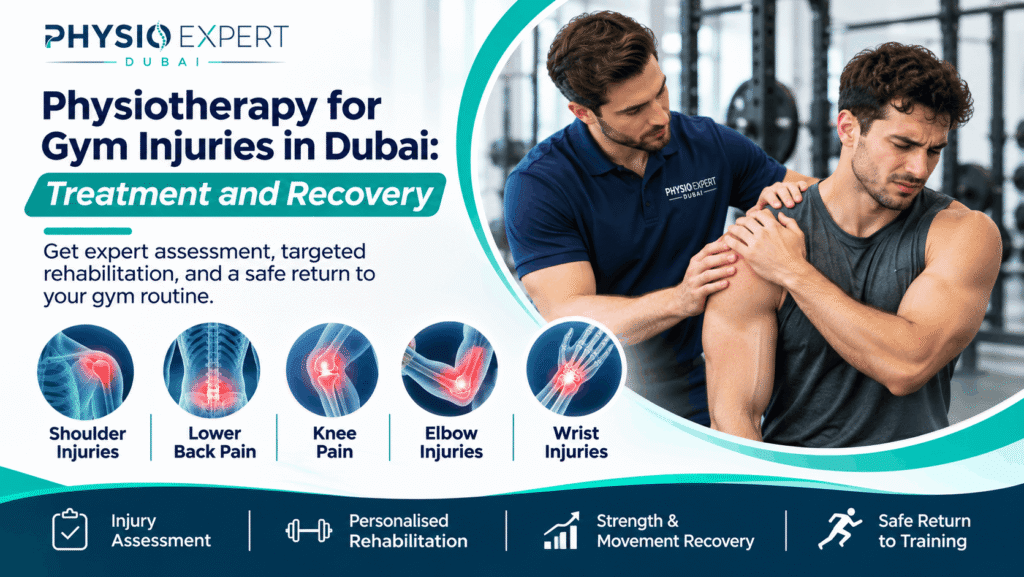
Regular gym training can improve strength, mobility, cardiovascular health and overall fitness. However, lifting weights, performing repetitive exercises or increasing training intensity too quickly can sometimes lead to injuries.
Gym-related injuries may affect the shoulders, back, knees, elbows, wrists and muscles. Some develop suddenly during a workout, while others build gradually through repeated strain, inadequate recovery or poor load management.
Gym injury physiotherapy in Dubai can help identify the cause of pain, restore movement and strength, and support a safe return to exercise. A physiotherapist can assess your injury, understand your training routine and develop a rehabilitation plan that matches your physical condition and fitness goals.
This guide explains common gym injuries, their causes, treatment options, recovery expectations and practical ways to reduce the risk of future problems.
What Causes Gym Injuries?
Gym injuries can occur during strength training, cardio workouts, functional fitness sessions or group exercise classes. They often result from a combination of training demands, physical capacity and recovery habits.
1. Increasing Weight or Intensity Too Quickly
Suddenly increasing the weight, repetitions, sets or frequency of workouts can place more stress on muscles, tendons and joints than they are prepared to tolerate.
Progressive overload is an important part of strength training, but increases should be gradual and appropriate for your current ability.
2. Incorrect or Unsuitable Exercise Technique
Poorly controlled movements or using a technique that does not suit your mobility and strength may increase stress on certain body structures.
However, there is no single perfect technique for every person. Exercise form should be appropriate to the individual, the movement and the training objective.
3. Insufficient Warm-Up
Starting intense exercise without gradually preparing the body may affect performance and comfort.
A warm-up can include light aerobic activity, dynamic movements and practice repetitions before heavier sets.
4. Inadequate Recovery
Muscles and connective tissues need time to recover between demanding sessions. Training the same muscle groups intensely without sufficient recovery may contribute to persistent soreness, fatigue and reduced performance.
5. Muscle Imbalances or Reduced Physical Capacity
Differences in strength, mobility or coordination may affect how a person performs certain exercises. These factors do not automatically cause injury, but they may become relevant when combined with high training loads or poor recovery.
Also Read More – Physiotherapy for Back Pain in Dubai: When Should You See a Physio?
Common Gym Injuries
Gym injuries vary depending on the type of exercise, training experience and physical condition. Some of the more common injuries include muscle strains, tendon problems and joint-related pain.
1. Muscle Strains
A muscle strain occurs when muscle fibres are overstretched or damaged. Strains may happen during heavy lifting, explosive movements or exercises performed under fatigue.
Common symptoms include:
- Sudden or gradually developing muscle pain.
- Tenderness or tightness.
- Pain when contracting or stretching the affected muscle.
- Reduced strength or movement.
- Swelling or bruising in more significant injuries.
Muscle strains can affect the hamstrings, quadriceps, calves, chest, shoulders and back.
Muscle injury physiotherapy may involve activity modification, progressive strengthening, mobility exercises when appropriate and a gradual return to training. The rehabilitation plan depends on the location and severity of the injury.
2. Shoulder Injuries
Shoulder pain may develop during overhead presses, bench presses, lateral raises, pull-ups or other upper-body exercises.
Possible causes include rotator cuff-related shoulder pain, tendon irritation, muscle strains and joint problems.
Symptoms may include:
- Pain when lifting the arm.
- Discomfort during pressing or pulling exercises.
- Reduced shoulder strength.
- Pain when lying on the affected side.
- Restricted movement.
Physiotherapy may include shoulder mobility assessment, progressive strengthening, exercise modification and movement training based on the underlying condition.
3. Lower Back Pain
The lower back may become painful during deadlifts, squats, rowing exercises or other movements that load the trunk.
Back pain can have several causes, and pain during lifting does not necessarily mean that a spinal structure has been damaged.
A physiotherapist may assess movement, strength, training technique and symptom response before recommending a suitable rehabilitation programme. Treatment may include graded exercise, trunk strengthening and adjustments to training load.
4. Knee Pain
Knee pain may occur during squats, lunges, leg presses, running or jumping exercises.
Possible causes include patellofemoral pain, tendon-related problems, muscle strains and other joint conditions.
Symptoms may include:
- Pain during squatting or lunging.
- Discomfort when climbing stairs.
- Swelling or stiffness.
- Pain during or after exercise.
- Reduced confidence when loading the leg.
Treatment depends on the cause and may include strengthening, movement assessment, activity modification and gradual progression back to gym exercises.
5. Elbow and Wrist Injuries
Repeated gripping, pressing and pulling can contribute to pain around the elbow or wrist.
Examples include tendon-related elbow pain, wrist sprains and irritation associated with repetitive loading.
Symptoms may include pain during gripping, reduced grip strength, tenderness and discomfort during pressing or pulling exercises.
Physiotherapy may involve load modification, strengthening, mobility work and guidance on adjusting exercise selection or equipment use.
6. Tendon Injuries
Tendons connect muscles to bones and help transfer force during movement. Repeated loading can sometimes lead to tendon pain, particularly when training demands increase faster than the tendon can adapt.
Common gym-related tendon problems may affect the shoulder, elbow, knee or Achilles tendon.
Rehabilitation often involves carefully progressed strengthening and load management. Tendon recovery can take time, so exercise progression should be guided by symptoms and functional improvement.
7. Delayed-Onset Muscle Soreness (DOMS)
Delayed-onset muscle soreness is common after unfamiliar or demanding exercise. It usually develops within several hours and may peak over the next one to three days.
Typical symptoms include muscle tenderness, stiffness and temporary discomfort during movement.
DOMS generally improves with time and does not necessarily indicate an injury. However, severe pain, marked swelling, unusual weakness or dark urine after intense exercise requires urgent medical assessment because these can be signs of a serious condition such as rhabdomyolysis.
Read More – How to Choose the Best Physiotherapy in Jumeirah, Dubai
How Does Gym Injury Physiotherapy in Dubai Help?
Physiotherapy aims to help you recover from an injury while rebuilding the strength and capacity needed for your usual activities.
Treatment is individualised and may include the following components.
1. Injury Assessment
The physiotherapist will review your symptoms, training history and the movements that aggravate your pain.
An assessment may include:
- Reviewing your recent training routine and workload.
- Checking joint mobility and muscle strength.
- Assessing movement and functional capacity.
- Identifying activities that increase or reduce symptoms.
- Determining whether further medical evaluation is needed.
This information helps guide treatment and establish realistic recovery goals.
2. Pain and Symptom Management
In the early stages, treatment may focus on reducing aggravating activities and maintaining comfortable movement.
Depending on the injury, a physiotherapist may recommend temporary exercise modifications, therapeutic exercises and other clinically appropriate treatments.
The aim is to manage symptoms while addressing the factors that affect your ability to move and train.
3. Therapeutic Exercise
Exercise is often central to rehabilitation. A programme may include:
- Strengthening exercises for affected muscles.
- Mobility exercises when movement is restricted.
- Balance and coordination training.
- Gradual exposure to previously painful movements.
- Functional exercises that prepare you for gym activities.
Exercise selection and intensity should reflect the injury, recovery stage and individual tolerance.
4. Movement and Exercise Technique Review
A physiotherapist may review relevant exercises such as squats, deadlifts, presses or rows to identify whether adjustments could improve comfort or control.
The goal is not to impose one technique on everyone, but to find a safe and effective approach that suits your body, goals and current capacity.
5. Return-to-Gym Planning
Returning to training too quickly may aggravate symptoms or delay recovery.
A physiotherapist can help you plan a gradual return by adjusting exercise selection, weight, repetitions, range of motion and training frequency.
Progression should be based on symptom response, strength, movement quality and functional milestones rather than a fixed timeline alone.
Gym Injury Treatment: What Does Recovery Involve?
Recovery depends on the injury, its severity, your general health and how consistently you follow the rehabilitation plan.
Stage 1: Modify Training and Manage Symptoms
The first step may involve temporarily reducing or avoiding exercises that significantly aggravate the injury.
Complete rest is not always necessary. Depending on the condition, you may be able to maintain fitness through modified training or other comfortable activities.
Stage 2: Restore Comfortable Movement
As symptoms settle, rehabilitation may focus on improving mobility and restoring normal movement patterns.
Exercises should be introduced gradually and adjusted if they cause significant or lasting symptom aggravation.
Stage 3: Rebuild Strength and Capacity
Progressive strengthening helps prepare the affected tissues for everyday activities and gym demands.
Training may begin with lower loads or controlled movements before progressing towards heavier or more complex exercises.
Stage 4: Return to Specific Gym Exercises
The final stage involves gradually reintroducing the exercises that matter to you.
For example, a person recovering from shoulder pain may progress from controlled shoulder strengthening to modified pressing and eventually to their usual upper-body routine, when clinically appropriate.
A person recovering from a lower-limb injury may progress through supported exercises, single-leg work and more demanding movements according to their recovery.
How Long Does a Gym Injury Take to Recover?
There is no single recovery timeline for gym injuries.
| Injury type | General recovery considerations |
| Mild muscle strain | May improve over a few weeks |
| More significant muscle strain | May require several weeks or longer |
| Tendon-related pain | Often requires gradual rehabilitation over weeks to months |
| Joint-related injury | Depends on the diagnosis and severity |
| Serious injury or surgery | Requires an individualised medical and rehabilitation plan |
These are broad expectations, not guaranteed timelines. A physiotherapist can provide a more relevant estimate after assessing your injury and monitoring your progress.
How to Prevent Gym Injuries
Although not every injury can be prevented, several training habits may help reduce avoidable risks.
1. Progress Gradually
Increase weights, repetitions and training volume in manageable steps. Avoid making several major changes to your routine at once.
2. Warm Up Before Training
Begin with light activity and dynamic movements. Perform practice repetitions before working with heavier loads.
3. Prioritise Controlled Movement
Choose loads that allow you to perform exercises with appropriate control. If technique deteriorates significantly as fatigue increases, consider reducing the load or ending the set.
4. Include Rest and Recovery
Allow sufficient recovery between demanding sessions. Sleep, nutrition and appropriate training frequency all contribute to recovery.
5. Strengthen Supporting Muscle Groups
A balanced programme can help develop strength across the body rather than focusing exclusively on a few exercises or muscle groups.
6. Adapt Exercises When Needed
If an exercise repeatedly causes pain, consider modifying the load, range of motion, equipment or movement variation. Persistent pain should be assessed rather than repeatedly trained through.
7. Seek Guidance After an Injury
If pain persists, returns whenever you train or limits daily activities, seek professional assessment. Early guidance may help clarify the problem and prevent inappropriate training progression.
When Should You See a Physiotherapist?
Consider physiotherapy if you experience:
- Pain that persists or repeatedly returns during workouts.
- Reduced strength or range of motion.
- Difficulty performing everyday activities after an injury.
- Recurrent muscle strains or tendon problems.
- Pain that prevents you from returning to your usual training.
- Uncertainty about how to modify your exercise routine.
Seek urgent medical attention if you have severe pain, significant swelling, visible deformity, inability to bear weight or sudden loss of function. Chest pain, difficulty breathing, fainting or symptoms of severe heat illness also require emergency care.
Why Choose Physio Expert Dubai for Gym Injury Rehabilitation?
Gym injuries can affect your ability to train, work and carry out everyday activities. Rehabilitation should consider not only the injured area but also your exercise routine, fitness goals and the demands of your preferred activities.
At Physio Expert Dubai, physiotherapy may include injury assessment, therapeutic exercise, strength and mobility rehabilitation, and guidance on returning to gym training.
An individualised approach can help you understand your symptoms, identify suitable exercise modifications and work towards restoring strength and confidence.
Final Thoughts
Gym injuries can arise from muscle strains, tendon problems, joint pain or training demands that exceed your current capacity. Understanding the injury and adjusting your routine can help support recovery while reducing unnecessary stress.
Gym injury physiotherapy in Dubai can help you manage symptoms, rebuild strength and return to exercise through a personalised rehabilitation programme. If pain persists or limits your training, an assessment can help you identify appropriate next steps.
Frequently Asked Questions
1. Can physiotherapy help with gym injuries?
Yes. Physiotherapy can help assess and rehabilitate many gym-related injuries, including muscle strains, shoulder pain, knee pain, tendon problems and back pain. Treatment depends on the diagnosis and individual needs.
2. Should I stop going to the gym if I have an injury?
Not always. Some injuries allow modified training, while others require temporary avoidance of certain activities. A physiotherapist can help determine which exercises are appropriate during recovery.
3. How many physiotherapy sessions are needed for a gym injury?
The number of sessions depends on the injury, severity, recovery progress and rehabilitation goals. Your physiotherapist can review your progress and adjust the treatment plan accordingly.
4. Can I lift weights during physiotherapy?
In many cases, weight training can be reintroduced or modified during rehabilitation. The appropriate load, exercise and range of motion depend on the injury and your current tolerance.
5. Is muscle soreness after the gym an injury?
Not necessarily. Delayed-onset muscle soreness is common after unfamiliar or demanding exercise and usually improves within a few days. Severe, unusual or worsening symptoms should be assessed.
6. What is the difference between a muscle strain and muscle soreness?
A strain involves damage to muscle fibres and may cause localised pain, weakness or bruising. Ordinary post-exercise soreness is usually more diffuse and develops after unfamiliar or intense activity. An assessment may be needed if the distinction is unclear.
7. Can gym injuries happen even with correct exercise technique?
Yes. Injuries can occur even when exercises are performed with good technique. Training load, recovery, previous injuries and individual physical capacity can all influence injury risk.
8. How can I prevent recurring gym injuries?
Gradual training progression, adequate recovery, balanced strength training and appropriate exercise modifications may help reduce recurrence. Persistent or repeated injuries should be assessed to identify relevant contributing factors.
9. Do I need a scan for a gym injury?
Not every gym injury requires imaging. A clinician can assess your symptoms and determine whether further investigation is appropriate based on the suspected condition and examination findings.
10. When can I return to my normal workout routine?
Return depends on the injury and your recovery. You should be able to perform relevant movements with appropriate strength and control and tolerate progressively increased training loads. A physiotherapist can help guide this process.
